
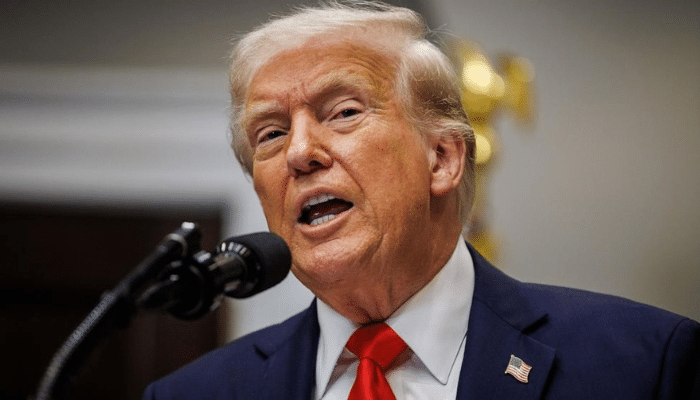
Donald Trump’s political brand — an unusual blend of border control, neoliberal economics, and mercantilist trade — has defined much of modern American populism. While it may appear to be a uniquely American phenomenon, recent trends suggest that this formula could also find resonance across Europe.
As economic uncertainty rises and mainstream parties struggle to connect with anxious voters, the “Trump model”—offering security, simplicity, and national pride—may be quietly gaining traction on the other side of the Atlantic.
The Trump Political Formula: A Three-Part Strategy
At its core, Trump’s appeal is built on three interconnected strands:
- Strict immigration control at home
- Neoliberal economics domestically
- Mercantilist trade abroad
While these elements may seem contradictory, together they form a powerful narrative:
“Security through exclusion, prosperity through deregulation, and pride through confrontation.”
This mix allows Trump to appeal to different voter groups simultaneously—business elites seeking deregulation, middle-class voters wanting protection from foreign competition, and citizens anxious about national security.
Europe’s Shifting Political Climate
Many European nations are already grappling with the same themes.
In France, Germany, and Italy, political debates around migration, market liberalisation, and economic sovereignty dominate public discourse. When economic volatility intensifies—whether due to energy prices, inflation, or war—these issues become even more politically charged.
Recent research across 24 EU countries supports this trend. Using data from the World Uncertainty Indices, economist Giray Gozgor found that periods of higher uncertainty correlate with increased support for populist parties, particularly on the right.
When citizens face unpredictable conditions, they tend to seek clear, emotionally satisfying narratives rather than complex policy solutions. Trump’s three-part strategy fits perfectly into that demand.
Immigration: Control and Reassurance
Immigration forms the emotional core of the Trump model.
By promising to “secure the borders,” Trump provides a sense of control and stability during chaotic times. The message is less about economic logic and more about psychological reassurance—a symbolic defense against uncertainty.
Europe has experienced similar dynamics. Figures like Marine Le Pen in France, Giorgia Meloni in Italy, and the AfD in Germany have successfully linked immigration restrictions to national stability. As inflation rises and energy costs strain households, calls for tighter borders often become more politically persuasive.
Neoliberalism: Deregulation and Domestic Freedom
The second pillar of Trumpism—neoliberal economics—emphasizes deregulation, lower taxes, and fewer restrictions on business. On the surface, this appears at odds with the protectionist tone of his immigration and trade policies.
However, in practice, it enables coalition building. Business elites and middle-class professionals both benefit: the former from deregulation, the latter from the promise of entrepreneurial freedom.
The underlying message is compellingly simple:
“You will be protected from global competition—and free at home to prosper.”
During times of uncertainty, that message appeals to both fear and ambition.
Mercantilism: Protectionism Abroad
The third strand of the formula flips the domestic script. In foreign trade, Trump embraces mercantilism, advocating tariffs and confrontation over cooperation. While economists may dismiss this as short-sighted, politically it serves a crucial purpose: it provides an external adversary.
Trade wars and “America First” rhetoric transform economic debates into nationalistic theatre, where confrontation becomes a sign of strength.
Europe is not immune to this logic. Discussions of “strategic autonomy” and “economic sovereignty” have become mainstream, especially since the pandemic and the Russia-Ukraine war. Protecting domestic industries and reducing dependence on global supply chains have become politically popular ideas.
The Hidden Risks Behind the Appeal
Despite its political effectiveness, the Trump formula carries significant economic dangers:
- Restricting immigration worsens labour shortages in ageing European societies.
- Deregulation can increase income inequality, fuelling the very resentment populists exploit.
- Trade protectionism threatens export-dependent economies, especially Germany.
What appears to be a neat political narrative may, in reality, deepen the very instability it claims to solve. As uncertainty grows, populist solutions can create a feedback loop, driving more volatility and further eroding trust in institutions.
Why Europe Is Vulnerable
France, Germany, and Italy are particularly exposed to this trend. Each has a combination of:
- Established populist parties ready to amplify Trump-style narratives.
- Ageing populations and labour market constraints.
- High exposure to global shocks, from energy supply disruptions to trade conflicts.
These structural weaknesses make them fertile ground for a narrative that promises control, prosperity, and pride in a turbulent world.
What Policymakers Can Do
Countering this growing appeal requires more than fact-checking or policy correction—it requires cear alternative stories that can compete emotionally and intellectually.
- Reduce uncertainty at its roots.
- Strengthen social safety nets, unemployment insurance, and economic transparency.
- Offer policies that feel protective, not abstract.
- Build inclusive narratives.
- Communicate the benefits of fair globalisation and shared prosperity.
- Highlight how openness and cooperation can enhance—not threaten—security.
- Safeguard democratic institutions.
- Preserve the independence of courts, regulators, and civil society.
- Prevent populist rhetoric from undermining institutional trust.
- Reform globalisation on Europe’s terms.
- Invest in strategic sectors, adopt carbon border taxes, and promote green industrial policy.
- Frame these moves not as isolation but as intelligent sovereignty.
Conclusion: A Warning for Europe
Donald Trump’s blend of border control, neoliberalism, and mercantilism is not just an American story. It’s a playbook for politics in uncertain times, when clarity matters more than consistency.
For Europe, the risk is that prolonged instability—from economic shocks to migration crises—could make Trump-style populism even more appealing.
The challenge for European policymakers is urgent: reduce uncertainty, restore confidence, and offer narratives of inclusion before exclusionary politics take deeper root.