
Net Greenhouse Gas Emissions to Fall 90% by 2040 Compared to 1990 Levels
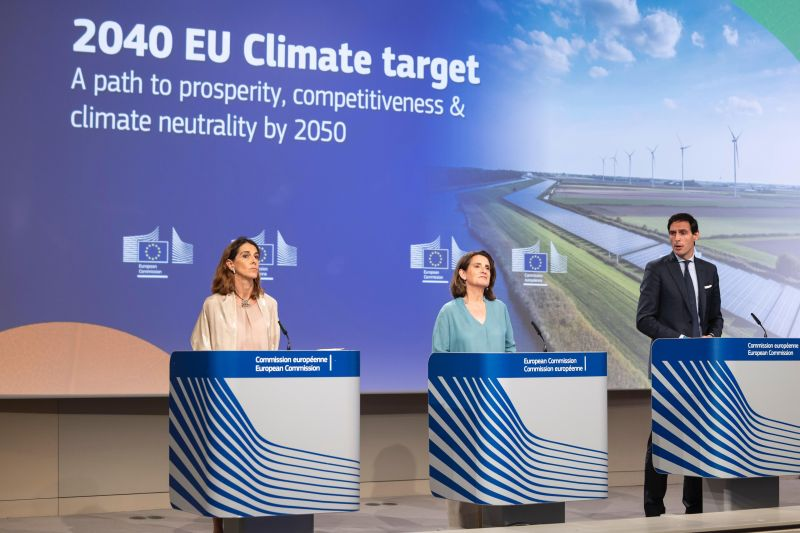
The European Parliament has taken a decisive step in the bloc’s long march toward climate neutrality, approving a binding target to slash net greenhouse gas emissions by 90 percent by 2040 compared to 1990 levels. The vote, held on February 10, 2026, passed with 413 votes in favor, 226 against, and 12 abstentions, formalizing a political agreement reached with the Council late last year.
Intermediate Milestone Between 2030 and 2050
This amendment to the EU Climate Law inserts an intermediate milestone between the existing 55 percent reduction goal for 2030 and the overarching commitment to achieve net-zero emissions by 2050.
The target is legally binding but incorporates flexibilities negotiated during intense trilogue discussions. At least 85 percent of the reductions must come from domestic efforts within the EU, while up to 5 percent can be met through high-quality international carbon credits starting from 2036.
The agreement also mandates biennial progress reviews by the European Commission, which will consider scientific advancements, energy prices, technological progress, and economic competitiveness, potentially allowing future adjustments to the target.
Delay in ETS2 Provides Extra Preparation Time
A notable concession in the package is the one-year postponement of ETS2, the expanded Emissions Trading System covering CO₂ emissions from fuel combustion in buildings and road transport, from 2027 to 2028. The delay aims to give member states and affected sectors additional preparation time amid concerns over implementation costs and public acceptance.
Years of Negotiations Behind the Deal
The decision follows a multi-year process. The European Commission first outlined its 2040 vision in a February 2024 Communication, backed by an extensive impact assessment and advice from the European Scientific Advisory Board on Climate Change.
A formal proposal emerged in July 2025, initially suggesting up to 3 percent international credits, but negotiations with member states and Parliament pushed the allowance to 5 percent while preserving a strong domestic focus. Public consultations in 2023 informed the early stages, and the final deal reflects compromises to balance ambition with political realities, particularly in energy-intensive economies.
EU Leadership and Global Implications
“This milestone reaffirms the EU’s leadership on global climate action,” said a senior European Commission official. “It embeds a pathway demanding accelerated decarbonization across power generation, industry, transport, agriculture, and land use.”
Yet challenges remain. The European Environment Agency’s recent assessments indicate that while the EU is largely on track for its 2030 targets, broader environmental objectives under the 8th Environment Action Programme remain off track. Many 2030 goals, including biodiversity, circular economy, and pollution reduction, face a narrowing window, with emissions reductions needing to accelerate substantially beyond current trajectories.
Geographic and Economic Implications
Geographically, impacts will vary across the EU’s diverse landscape. Northern and Western member states such as Germany, France, and the Nordic countries, already advanced in renewables and energy efficiency, stand to benefit from strengthened incentives for innovation in wind, solar, hydrogen, and carbon capture.
Southern and Eastern Europe, including coal-dependent Poland, Romania, and Bulgaria, may face steeper transitions in energy systems and heavy industry, potentially requiring targeted support through funds like the Just Transition Mechanism or Innovation Fund. Agricultural regions in Central and Southern Europe will need to adapt land-use practices for enhanced carbon sequestration, while coastal and Mediterranean areas confront compounded risks from climate impacts already underway.
Economically, the target signals a massive shift toward green industrialization. Proponents argue it will drive investment in clean technologies, create jobs in renewables and efficiency sectors, and enhance energy security by reducing reliance on imported fossil fuels.
However, critics warn of risks. “Higher short-term compliance burdens could strain energy-intensive industries and raise household costs, particularly with the delayed ETS2,” said a representative from a European industry association. The allowance for international credits offers cost efficiency but raises questions about additionality and true global ambition.
Public Consultations to Shape Implementation
As public consultations open on the post-2030 framework, including national targets, flexibilities, and detailed rules for international credits, the EU enters a critical phase of implementation. The 2040 target is not the end but a pivotal chapter in a story that began with the 1990 baseline, gained momentum through the Paris Agreement and the Green Deal, and now demands urgent, equitable action to secure a livable planet.
With 2030 goals still precarious, the real test lies in translating this legal commitment into tangible, accelerated change across the continent.