
The European Union has taken a decisive step to reinforce Ukraine’s survival and sovereignty. EU leaders have approved a €90 billion loan package funded through joint debt issuance. The initiative aims to cover nearly two thirds of Ukraine’s projected financing needs for 2026 and 2027.
The package blends macro-financial support with expanded military assistance. It arrives as Russia’s invasion continues and global geopolitical tensions intensify. More importantly, it reflects Europe’s growing willingness to act as a strategic power rather than a supporting player.
The decision also signals a shift toward European security self-reliance at a moment when transatlantic backing appears less certain.
“This is not only about Ukraine’s survival. It is about Europe defining its role in a harsher world.”
The Agreement at a Glance
From Deadlock to Decision
EU leaders approved the €90 billion Ukraine Support Loan at a European Council summit in Brussels in mid-December 2025. The facility carries zero interest and will be disbursed over two years.
Negotiations proved difficult. An earlier proposal sought to use €300 billion in frozen Russian sovereign assets seized after the 2022 invasion. Legal concerns and political resistance stalled that plan. Hungary, in particular, raised repeated objections.
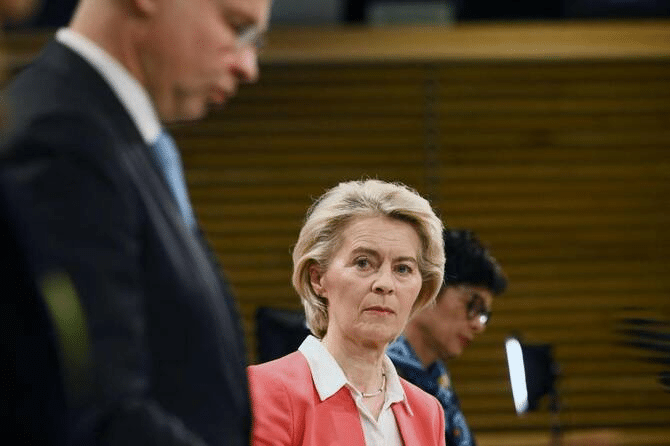
In January 2026, the European Commission finalized an alternative framework. Commission President Ursula von der Leyen confirmed that €60 billion would support military assistance. This funding will finance EU-made weapons, ammunition, and defense-related investments.
The remaining €30 billion will provide macro-financial aid. It will help Ukraine cover budget shortfalls and maintain essential public services, including healthcare, education, and pensions.
Twenty-four of the EU’s 27 member states are participating. The loan is backed by unused budget headroom within the EU’s long-term financial framework. Member states will not issue direct national guarantees.
Ukraine’s repayment obligation depends on future Russian war reparations. This structure shifts long-term financial responsibility to the aggressor.
The International Monetary Fund estimates Ukraine faces a €135 to €137 billion financing gap for 2026 and 2027. That includes €83 billion in military needs and €52 billion for fiscal stability. The EU package covers most of that shortfall. Initial disbursements could begin in April 2026.
“Europe has sent a clear signal. Ukraine will not face a financial or military cliff.”
From Maidan to Marathon Aid
A Decade of Escalating Commitment
The roots of the €90 billion loan stretch back more than a decade. Ukraine’s push toward European integration intensified during the 2013–2014 Euromaidan protests. Demonstrators ousted President Viktor Yanukovych after he abandoned an EU association agreement.
Russia responded by annexing Crimea and backing separatist forces in eastern Ukraine. Those actions laid the groundwork for the full-scale invasion launched in February 2022.
EU support expanded rapidly after the invasion. Early measures included emergency macro-financial aid and humanitarian assistance. In 2023, the bloc launched the €50 billion Ukraine Facility, combining grants, loans, and reform incentives.
By late 2025, the EU and its member states had committed more than €193 billion in total aid. That figure exceeded contributions from any other donor.
Europe’s role grew further as U.S. support weakened following the 2024 election and a turn toward domestic priorities in Washington.
In early 2025, G7 talks explored using profits from frozen Russian assets to support Ukraine. Legal risks and political opposition blocked consensus. Hungary again threatened to veto key steps.
EU leaders then turned to joint borrowing. The resulting loan echoes the NextGenerationEU recovery fund created during the COVID-19 crisis. While smaller in scale, it applies the same logic to wartime support and defense.
“Emergency assistance has become a long-term strategic pledge.”
What Sets This Package Apart
Defense, Industry, and Accountability
This loan differs sharply from previous aid efforts. It centralizes military, fiscal, and industrial policy within one EU-managed instrument.
Military funding must support European defense manufacturers. This requirement strengthens the EU’s industrial base and reduces reliance on external suppliers. It also responds to years of underinvestment in European arms production.
The repayment structure marks another departure. By tying repayment to future Russian reparations, the EU has embedded accountability into its financing model. The message is clear. Aggression carries lasting economic consequences.
Politically, the package deepens Ukraine’s integration with Europe. Accession talks opened in 2024. Financial and security ties now advance alongside them.
Geographical Ripples
Securing Europe’s Eastern Edge
The strongest impact will be felt along Europe’s eastern flank. Ukraine gains resources to resist Russian advances in regions such as Donbas and Kharkiv. Fighting there has displaced millions and devastated infrastructure.
Neighboring EU states stand to benefit. Poland, Romania, Slovakia, and the Baltic countries host millions of Ukrainian refugees. They also face cyberattacks and disinformation campaigns linked to Moscow.
Stronger Ukrainian defenses reduce spillover risks. They also ease pressure on EU borders.
In the Black Sea region, improved security supports grain exports. This remains vital for global food markets.
Western EU states benefit as well. Germany and France, major defense suppliers, see increased industrial demand. Political tensions persist in parts of Central Europe, where war fatigue and pro-Russian views influence domestic debates.
“Ukraine’s front line has become Europe’s first line of defense.”
Economic Effects
Stability for Kyiv, Pressure for Brussels
The loan offers Ukraine a path away from fiscal collapse. The €30 billion in macro-financial aid will support salaries, pensions, and reconstruction. Ukraine’s GDP remains about 30 percent below pre-war levels. Continued aid could support growth of 3 to 4 percent in 2026.
For the EU, defense spending acts as an economic stimulus. Arms production supports jobs and investment across the bloc. Analysts estimate spillover effects could add up to 0.5 percent to EU GDP growth.
Risks remain. Joint borrowing increases EU liabilities. Member states already face pressure from energy transitions, migration, and inflation. Market confidence will depend on political unity and fiscal discipline.
Russia faces growing indirect costs. Sanctions, frozen assets, and lost revenues compound the war’s estimated trillion-dollar burden. Ukraine’s export capacity also helps stabilize global food and energy markets, benefiting regions far beyond Europe.
A Defining Choice for Europe
The €90 billion loan marks a turning point for the European Union. It reflects a willingness to act decisively in defense of continental security.
The risks are real. Fiscal strain and political divisions could test unity. Yet the alternative is far worse. A weakened Ukraine would invite instability across Europe.
As diplomatic efforts continue, the package strengthens Kyiv’s position. It also reinforces a core principle. Peace must be based on justice, not exhaustion.
Europe has made its commitment. Execution will determine its legacy.