
Arctic Sovereignty, Strategic Minerals, and the Politics Behind a Floating Offer
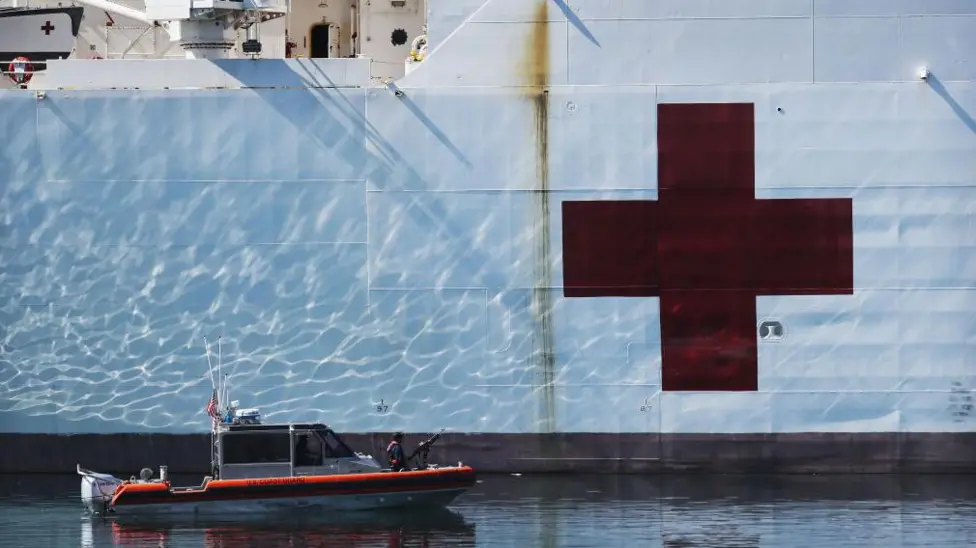
Greenland’s firm rejection of a proposed US hospital ship has reignited a geopolitical debate that has simmered for decades. When former US President Donald Trump posted that he was sending a hospital vessel, reportedly referencing the USNS Mercy, to “take care” of Greenlanders allegedly “not being taken care of,” Greenland’s Prime Minister Jens-Frederik Nielsen responded bluntly:
“It’s going to be a no thanks from us.”
At first glance, the exchange might seem like a brief diplomatic disagreement sparked by social media. In reality, it exposes deeper tensions involving sovereignty, Arctic militarization, mineral wealth, healthcare systems, and growing great power competition in the High North.
This was not simply about a hospital ship. It was about Greenland’s future.
The Immediate Flashpoint
A Social Media Post, A Sovereign Response
Trump wrote that he was dispatching a hospital ship filled with medical supplies, claiming “many people” on the island were sick and not receiving proper care. The post included an image resembling the USNS Mercy, one of two hospital ships operated by the US Navy.
Prime Minister Nielsen quickly rejected the premise. Writing publicly, he underscored Greenland’s universal healthcare system.
“We have a public healthcare system where treatment is free for citizens.”
He added pointedly:
“It’s not like that in the United States, where it costs money to go to the doctor.”
The timing drew additional scrutiny. Denmark’s Joint Arctic Command had recently evacuated a crew member from a US submarine near Nuuk for urgent medical treatment. Whether Trump’s post was connected to that incident remains unclear.
The Story Behind It
The 2019 Purchase Proposal
The controversy cannot be separated from Trump’s earlier attempt to purchase Greenland in 2019. The idea was widely dismissed at the time, but it revealed an enduring strategic calculation inside Washington.
Greenland matters.
Although Trump later stated he would not take Greenland by force and announced a “framework for a future deal,” Denmark and NATO allies reiterated that sovereignty was not open for negotiation.
This latest episode reopened those fault lines.
Why Greenland Is Strategically Indispensable
Arctic Gateway
Greenland sits between North America and Europe, commanding access to critical North Atlantic and Arctic corridors. As polar ice retreats, new shipping routes are becoming viable. Transit between Asia and Europe could shorten significantly, and military navigation corridors are expanding.
The Arctic is no longer a remote frontier. It is an emerging strategic highway.
Military Significance
The United States already operates Pituffik Space Base, formerly Thule Air Base, a vital early warning missile defense installation. The base plays a central role in ballistic missile detection and space surveillance.
In an era marked by renewed rivalry with Russia and expanding Chinese interest in the Arctic, Greenland represents critical strategic terrain.
Economic Stakes Beneath the Ice
Rare Earth Minerals
Greenland possesses substantial deposits of rare earth elements, uranium, zinc, iron ore, and potential offshore hydrocarbons. Rare earths are essential for electric vehicles, wind turbines, advanced electronics, and defense technologies.
Western governments are actively seeking alternatives to Chinese dominance in global rare earth supply chains. Greenland’s mineral reserves make it a strategic economic prize.
Independence Ambitions
Greenland has long debated full independence from Denmark. However, Denmark provides significant annual subsidies, and Greenland’s economy remains heavily reliant on fisheries. Large scale mining projects are politically sensitive and environmentally contentious.
Foreign investment directly influences Greenland’s long term economic direction. Offers from Washington are rarely viewed as purely humanitarian. They are interpreted within a broader geopolitical framework.
Healthcare as Political Symbol
On the surface, a hospital ship suggests humanitarian assistance. Diplomatically, it can signal something else.
The implication that Greenlanders were not receiving adequate care was interpreted by local leaders as a challenge to governance and autonomy. The response was firm but measured.
Greenland remains open to cooperation with the United States. It insists that discussions occur through formal diplomatic channels, not public declarations on social media.
Denmark, NATO, and Arctic Diplomacy
Denmark faces a delicate balancing act. It must safeguard sovereignty, support Greenlandic autonomy, maintain strong US defense cooperation, and avoid escalation in Arctic competition.
The Arctic is evolving into a quiet but consequential theater of strategic diplomacy.
A Wider Geopolitical Contest
Russia
Russia has expanded its Arctic military footprint, reopening Soviet era installations and increasing icebreaker capacity.
China
China describes itself as a “near Arctic” power and has invested in polar research, infrastructure, and shipping routes.
United States
For Washington, Greenland represents a missile defense platform, a logistics hub, a mineral partner, and a counterweight in Arctic competition.
Against that backdrop, even a hospital ship becomes geopolitically symbolic.
Why This Episode Matters
This episode illustrates how social media diplomacy intersects with sovereign relations. It highlights Greenland’s political maturity and determination to assert its autonomy. It underscores how healthcare, typically a domestic issue, can become geopolitical messaging.
Few territories with a population of just 56,000 occupy such a central place in global strategic calculations.
Greenland does.
Geographic and Economic Impact Assessment
Geographic Impact
Increased US attention could elevate Arctic maritime activity and intensify NATO coordination in the High North. Infrastructure planning in Greenland may accelerate as climate shifts open new routes.
Economic Impact
Heightened international focus could stimulate mining investment and global competition for rare earth supply chains. It may also increase scrutiny of Denmark’s subsidy structure and Greenland’s long term independence debate.
Greenland’s government appears committed to calibrated engagement rather than dependency.
Conclusion
This was not a dispute about medical aid. It was a statement about sovereignty.
Greenland’s response was calm, direct, and unmistakable. Partnership is welcome. Patronage is not.
As climate change reshapes geography, Arctic politics will shape the next phase of global competition. Greenland, once peripheral in world affairs, now stands firmly at the center.