
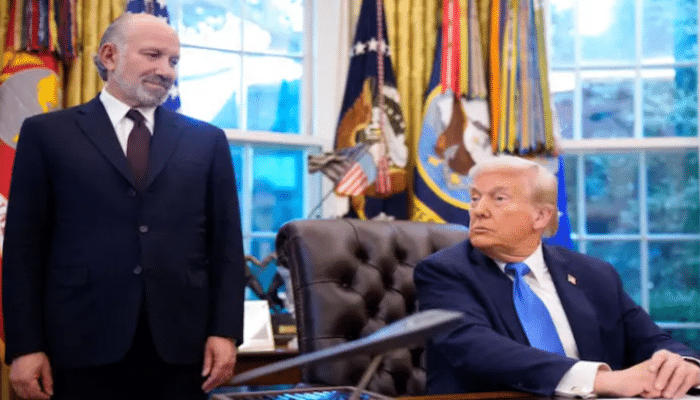
US President Donald Trump has defended his administration’s H-1B visa plan, saying the country needs skilled foreign talent for critical sectors. Trump acknowledged that long-term unemployed Americans cannot immediately fill complex roles, especially in defense and sensitive industries, without extensive training.
Speaking to Fox News’ Laura Ingraham, Trump said,
“You do have to bring in talent.”
When asked if the US had enough talent, he replied,
“No, you don’t. You don’t have certain talents… And people have to learn, you can’t take people off an unemployment line and put them into a factory. We’re going to make missiles.”
Indian Workers Dominate H-1B Visas
In 2024, Indian workers received over 70% of approved H-1B visas. This is due to a large backlog in approvals and a high number of skilled immigrants from India.
Trump’s H-1B Visa Crackdown
The President’s remarks come amid a wider H-1B visa crackdown:
- In September, Trump imposed a $100,000 fee on new H-1B applications.
- The US Department of Labor (DOL) launched 175 investigations into potential abuses, under an initiative called ‘Project Firewall’.
- The programme targets companies allegedly exploiting H-1B visas for roles in IT, engineering, and healthcare.
State-Level Pushback: Florida
In October, Florida Governor Ron DeSantis directed the state’s Board of Governors to stop using H-1B visas in universities. He argued that roles currently held by visa holders should go to Florida residents.
“Why are we bringing people in to assess our accreditation on an H-1B visa? We can’t do that with our own people?” DeSantis said. He called it cheap labor and urged universities to reassess hiring practices.
White House Response
The White House reaffirmed that Trump’s priority is to put American workers first. Officials also promised to fight lawsuits against the administration’s crackdown on H-1B visas.
Conclusion
Trump’s stance on H-1B visas reflects a balance between protecting American jobs and addressing skill shortages. While Indian workers dominate H-1B approvals, new fees and stricter oversight aim to ensure compliance and fairness. SMEs, universities, and tech firms will need to adapt to the changing H-1B landscape.