
As 2025 draws to a close, European concerns over Trump’s foreign policy have intensified, sparking deep unease about the future of the transatlantic alliance. President Donald Trump’s approach, often described as a “new world order,” has strained relations between Europe and the United States, increased pressure on NATO defense spending, and raised fears about possible concessions to Russia in Ukraine peace negotiations. European leaders worry that reduced U.S. involvement could leave the continent vulnerable, prompting calls for greater self-reliance in security matters.
Key Developments Fueling European Anxiety
Trump’s National Security Strategy and Criticism of Europe
In early December 2025, the Trump administration released a National Security Strategy that sharply criticized Europe. It warned of “civilizational erasure” caused by immigration, declining birth rates, economic stagnation, and perceived suppression of free speech and political opposition. The strategy accused European governments of weakness and suggested U.S. support for “patriotic” far-right parties to counter these trends. It also prioritized ending the Ukraine war quickly to normalize relations with Russia, urging Europe to take primary responsibility for its own defense.
European reactions were swift and critical. German officials labeled parts of the strategy “unacceptable,” while EU leaders like António Costa emphasized a “changed relationship,” firmly rejecting U.S. interference in internal affairs.
Pressure on NATO Defense Spending
Trump’s longstanding demand for higher NATO contributions led to a June 2025 summit agreement to raise European defense spending to 5% of GDP over the next decade, including infrastructure investments. While some praised this as progress, many European defense ministers consider the target unrealistic amid economic constraints. The U.S. has also pushed for Europe to lead conventional NATO defense by 2027, signaling a possible withdrawal of American security guarantees.
Ukraine Peace Negotiations and Fears of Concessions
Trump’s aggressive push to end the Russia-Ukraine war has heightened European fears. Key developments include:
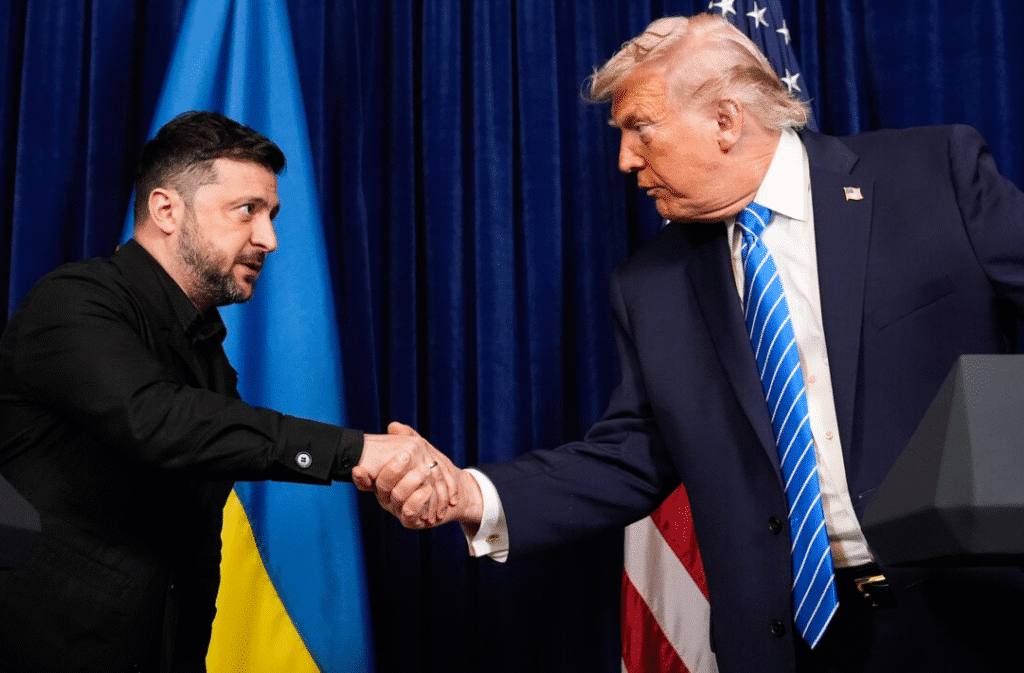
- A December 28, 2025, meeting at Mar-a-Lago between Trump and Ukrainian President Volodymyr Zelenskyy, where progress was reported on security guarantees modeled after NATO’s Article 5. However, thorny issues such as the Donbas territory remained unresolved.
- Earlier talks involving U.S. envoys proposed a 20-28-point peace plan that many Europeans fear favors Russia by allowing it to retain territory.
- Both the Kremlin and Trump opposed a European-Ukrainian temporary ceasefire proposal, viewing it as prolonging the conflict.
Europe worries that Trump might pressure Ukraine into unfavorable concessions, sidelining EU input and rewarding Russian aggression, potentially emboldening further threats to regional stability.
Europe’s Response: Pushing for Stronger Ukrainian Support and Autonomy
Amid concerns of U.S. disengagement, European leaders are taking steps to strengthen their role:
- Coordinating aid and security guarantees independently of the U.S.
- Exploring EU mutual defense clauses (Article 42.7) and building a stronger “European pillar” within NATO.
- Prominent leaders like Germany’s Friedrich Merz and France’s Emmanuel Macron have discussed sharing nuclear deterrence responsibilities and enhancing military coordination.
- A coalition of the UK, France, and Germany has pledged continued support for Ukraine, contrasting with what they perceive as U.S. impatience.
Why This Matters for Transatlantic Relations
Trump’s “America First” doctrine has shattered long-held illusions of an unbreakable transatlantic alliance. Experts note that while Europe still depends on U.S. security guarantees, diverging long-term interests are clear. As one analyst observed, tactical concessions to Trump may not preserve the strategic bond built over decades.
This evolving dynamic marks a pivotal moment: Europe aims to robustly support Ukraine while preparing for a future with potentially diminished U.S. commitment. The ongoing peace negotiations into 2026 will test whether a balanced resolution can be achieved or whether deeper rifts will continue to widen.