
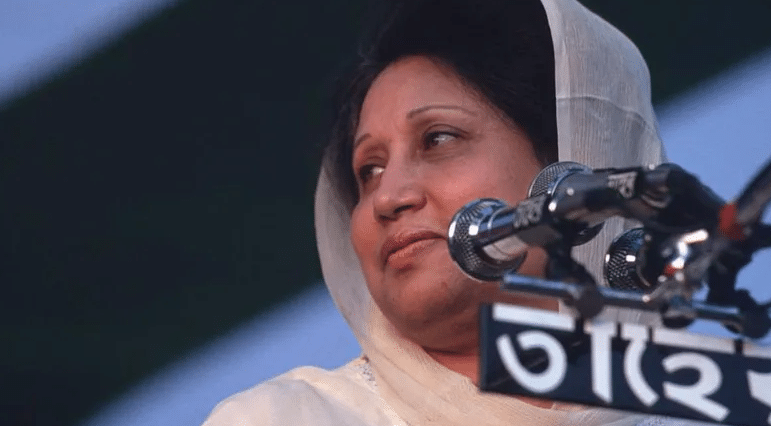
Khaleda Zia, the pioneering first female prime minister of Bangladesh, has died at the age of 80. She was a central figure in the country’s political scene for many years.
Zia led the Bangladesh Nationalist Party (BNP) and served two terms as prime minister during the 1990s and early 2000s. Her leadership helped shape Bangladesh’s democratic progress.
From Quiet Life to Political Power
Born in West Bengal in 1945, Khaleda Zia moved with her family to what is now Bangladesh after the 1947 partition of India. She married Ziaur Rahman, an army officer who became Bangladesh’s president, at the age of 15.
After her husband’s assassination in 1981, she entered politics and took charge of the BNP. Before this, she kept a low profile away from public life.
Leading the Fight for Democracy
Bangladesh was under military rule from 1982 until 1991. During this period, Zia led efforts to restore democracy by organizing protests and rallying support.
Her party won the 1991 general elections, making her the country’s first female prime minister and only the second woman to lead a Muslim-majority nation.
Key Achievements and Political Rivalry
Zia’s first term saw the introduction of free and compulsory primary education, boosting literacy rates. In 1996, she lost power to Sheikh Hasina’s Awami League but returned to office in 2001.
During her second term, she pushed for more women’s representation in parliament by reserving 45 seats for female lawmakers. She also focused on improving education for girls across the country.
Controversies and Legal Battles
After leaving office in 2006, Khaleda Zia faced corruption charges. She was arrested in 2007 and convicted in 2018 for embezzling funds intended for an orphanage.
Many saw the legal actions as politically motivated. She spent years in prison but was later released due to health concerns.
Final Years and Legacy
In 2024, mass protests led to the fall of Sheikh Hasina’s government. Khaleda Zia was freed, and her political rights were restored.
Despite serious health issues, she continued to hold influence within her party. She is survived by her elder son, Tarique Rahman, who recently returned from exile and may lead the BNP in the future. Her younger son, Arafat “Koko” Rahman, passed away in 2015.