
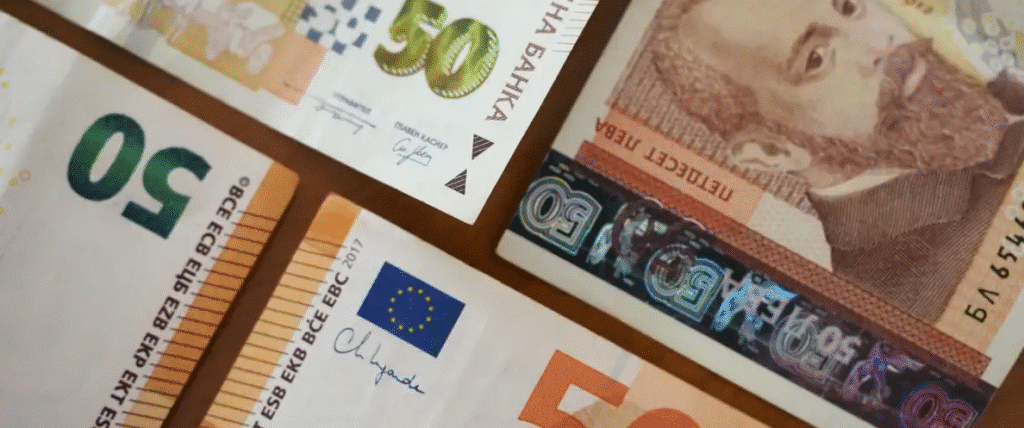
Bulgaria officially adopted the euro on 1 January 2026, becoming the 21st country to join the euro area, a major milestone not only for Bulgaria but for the future of European integration.
The move follows years of economic reforms, strict convergence criteria, and institutional preparation, backed by the European Commission and the European Central Bank.
A Historic Moment for Bulgaria and the European Union
With the euro’s introduction, more than 357 million EU citizens now share a single currency, strengthening economic unity across the bloc.
European Commission President Ursula von der Leyen described the development as:
“One of the European Union’s greatest achievements… This step is good for Bulgaria, and it strengthens Europe as a whole.”
The euro is expected to:
- Simplify travel and cross-border payments
- Increase price transparency
- Boost trade and market competitiveness
- Strengthen Bulgaria’s role in EU decision-making
How the Currency Changeover Works
From 1 January 2026, the euro gradually replaces the Bulgarian lev.
Key Changeover Details
- Fixed conversion rate: 1 euro = 1.95583 lev
- Dual circulation: Lev and euro used together for one month
- Change given in euro, even when paying in lev
- Dual price display: Mandatory from 8 August 2025 to 8 August 2026
To prevent unjustified price rises, Bulgaria introduced strict monitoring measures under consumer protection law.
Consumer Protection at the Core
Protecting citizens during the transition has been a central principle of Bulgaria’s national changeover plan.
Measures include:
- Daily monitoring of prices for 101 commonly purchased products
- Public price transparency via a dedicated website
- Supervision of retailers and service providers
- Awareness campaigns explaining the euro transition
The approach aims to counter inflation fears, a common concern during euro adoption.
Banks, ATMs and Cash Availability
The Bulgarian National Bank distributed euro banknotes and coins in advance.
- 96% of ATMs began dispensing euro cash on 1 January
- Remaining ATMs are expected to convert within two weeks
- Lev cash can be exchanged:
- Free of charge at the central bank (unlimited time)
- Free at banks and post offices for six months
- Fees may apply after 1 July 2026
Why Bulgaria Qualified for the Euro
In its 2025 Convergence Report, the European Commission confirmed that Bulgaria met all euro adoption criteria, including inflation control, fiscal discipline, and exchange-rate stability.
This assessment was independently supported by the European Central Bank.
In July 2025, EU finance ministers approved Bulgaria’s entry, clearing the final legal path.
Public Support Remains Strong
According to the latest Eurobarometer survey, public backing for the euro remains high across the EU, with majorities viewing the currency as beneficial both for Europe and individual member states.
Why This Matters for Europe
Bulgaria’s accession:
- Strengthens the euro’s global credibility
- Expands the single market
- Enhances EU economic resilience
- Signals continued commitment to integration despite geopolitical and economic challenges
At a time of global uncertainty, the euro’s expansion reinforces Europe’s long-term strategic stability.