
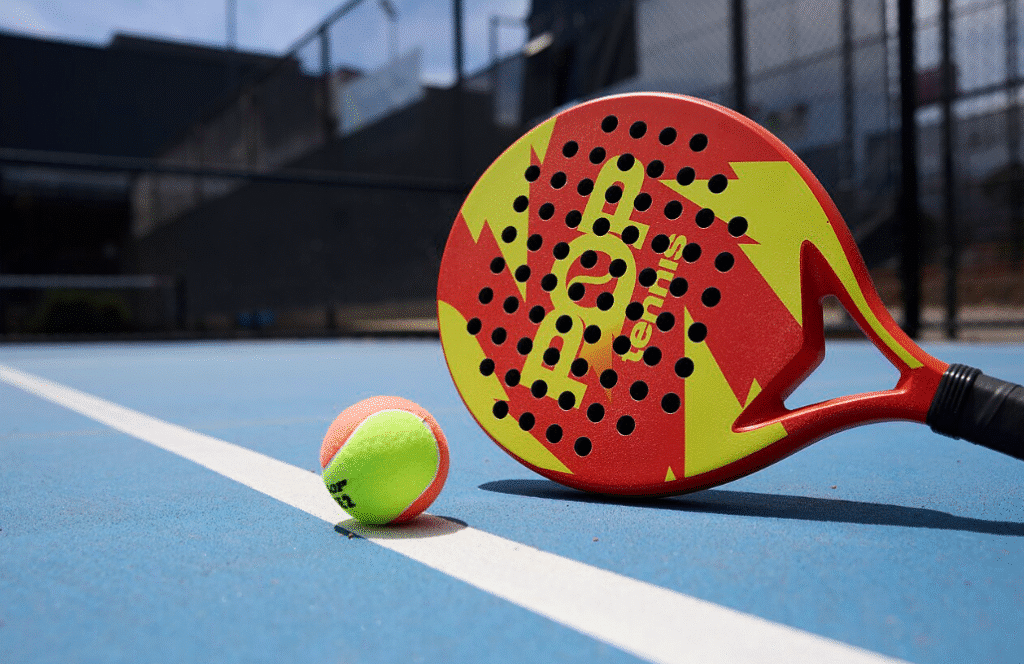
From packed clubs in Spain to newly built venues across Europe and beyond, padel is rapidly becoming a global sports phenomenon. Once a niche pastime played behind glass walls, padel is now expanding at an extraordinary pace, with new clubs opening worldwide. In 2026, this fast-growing racquet sport is a must-try for sports enthusiasts everywhere.
The Hottest Sport of 2026
Padel is a dynamic and social racquet sport, typically played in doubles on a compact, glass-walled court. The game’s appeal lies in its simplicity, accessibility, and fast-paced rallies, which keep players engaged whether they are beginners or seasoned pros. Unlike traditional tennis, padel courts are smaller and surrounded by walls, allowing the ball to bounce back into play and creating longer, more exciting rallies.
Francis Calvache, a top-ranked padel coach from Almería, Spain, explains why the sport is growing so fast: “It’s relatively easy to move the ball from one side of the court to the other. And because there are also walls, you have the chance for the ball to bounce back and not lose it, unlike in tennis.”
Born in Mexico, Perfected in Spain
Padel was invented in the late 1960s in Acapulco, Mexico, by Enrique Corcuera, a tennis enthusiast who lacked the space to build a full-sized court. His solution was to create a smaller court enclosed by walls to keep the ball in play.
The sport’s global journey began when Alfonso de Hohenlohe-Langenburg, a Spanish friend of Corcuera, experienced padel at Enrique’s home. Alfonso was so impressed that he introduced padel courts at a tennis club in Marbella, Spain, in 1974. From there, the sport quickly gained traction in Spain and Spanish-speaking countries like Argentina and Uruguay.
Today, Spain dominates professional padel, with seven of the world’s top ten male players coming from the country, according to the International Padel Federation (FIP).
A Sport for Everyone
Padel’s appeal goes beyond professional circuits. In the coastal town of San José, casual players gather on outdoor public courts, often meeting socially without formal training.
María Jesus, a local player, shares her connection to the game: “It’s a lot like when I play bat and ball on the beach. It reminds me of that, and that’s a really nice memory for me. It really brings me back to those beach moments with my family in summer.”
Why Is Padel Growing So Quickly?
Several factors explain padel’s rapid rise:
- It’s easy to learn and play.
- The doubles format encourages social interaction.
- Courts are smaller and cheaper to build than tennis courts.
- Many local authorities support padel due to its low operating costs.
- Private clubs benefit from higher court utilization.
According to the International Padel Federation, padel has expanded far beyond its traditional strongholds in Spain and Argentina, with strong growth across Europe, the Middle East, and the Americas.
The European Boom
In the UK alone, more than 400,000 people played padel at least once in 2025, marking a sharp rise, according to the Lawn Tennis Association. This reflects a wider trend across Europe, where new courts and clubs are appearing regularly.
For a sport born from limited space, padel has demonstrated impressive global appeal and adaptability.
Get Ready to Join the Padel Movement in 2026
If you want a fun, fast, and social way to stay active, padel is the sport to watch this year. Whether in a major city or a small town, chances are you’ll soon find a padel court near you.
Millions worldwide are discovering the excitement of padel. In 2026, it’s not just a game — it’s a global movement.