
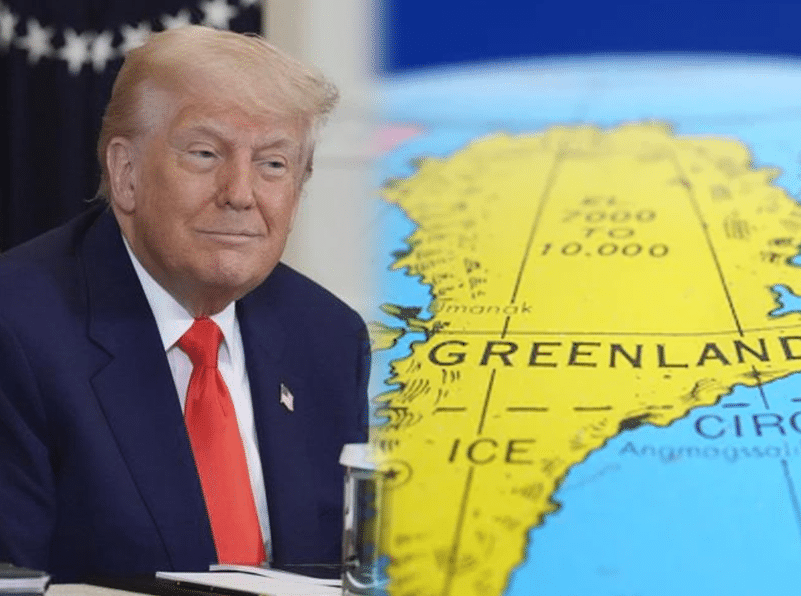
Greenland, the world’s largest island, spans over 2 million square kilometers in the Arctic, positioned between North America and Europe. Geographically part of North America, it remains an autonomous territory within the Kingdom of Denmark, home to about 57,000 people, predominantly Inuit. The relationship between the United States and Greenland is multifaceted, driven by military strategy, resource potential, climate dynamics, and evolving geopolitics. As of January 19, 2026, tensions have escalated under President Donald Trump’s second term, with renewed U.S. pressure for control amid Arctic competition.
Why Greenland Matters to the United States
Strategic Location
Greenland dominates key Arctic air and sea routes, including emerging shipping lanes such as the Transpolar Sea Route, as ice melt accelerates due to climate change. During the Cold War, it served as a vital outpost for monitoring Soviet threats. Today, it counters Russian and Chinese Arctic ambitions, enhancing U.S. defense in the High North.
Military Presence
The U.S. maintains Pituffik Space Base, formerly Thule Air Base, in northwest Greenland under the 1951 U.S.-Denmark Defense Agreement. The facility supports missile early warning, space surveillance, and satellite tracking, integral to U.S. Space Force operations. Recent developments include U.S. efforts to place Greenland under U.S. Northern Command jurisdiction in 2025, signaling a shift from European NATO oversight.
Natural Resources and Climate Change
Greenland holds vast reserves of rare earth elements, uranium, zinc, and potential oil and gas deposits, increasingly accessible as glaciers recede. The United States views these as critical for supply chain security against Chinese dominance in rare earths. Economic opportunities in mining and shipping routes heighten rivalry, with President Trump emphasizing that control is a “national security necessity” to prevent adversaries from gaining a foothold.
Arctic Geopolitics
As Arctic ice diminishes, new trade routes could shorten global shipping by 40 percent, making Greenland pivotal for U.S. interests in NATO, resource access, and countering Russian militarization or Chinese investments. The Trump administration has explored direct deals with Greenland, bypassing Denmark, to secure strategic advantages.
Historical Relationship: Key Stages
U.S. interest in Greenland traces back centuries, evolving from exploratory ambitions to strategic alliances.
Early and 19th-Century Interest
In 1868, Secretary of State William Seward explored acquiring Greenland alongside Alaska, viewing it as a northern gateway, though no deal materialized.
World War II and Cold War Era
In 1941, amid Denmark’s Nazi occupation, the U.S. signed an agreement to defend Greenland, establishing bases such as Thule, built in 1951 under secret “Project Iceworm.” The 1951 Defense Agreement formalized U.S. military presence under NATO, including radar systems for Soviet surveillance.
Autonomy and Self-Government
Greenland achieved home rule in 1979, gaining control over education, health, and fisheries. In 2009, self-government expanded to include judicial and police powers, while Denmark retained foreign affairs and defense. Greenlanders increasingly seek full independence, fueled by resource revenues, though economic reliance on Danish subsidies persists.
Recent U.S.–Greenland Developments (2024–2026)
Trump Presidency Renewal and Greenland Focus
After winning the 2024 election and inaugurating his second term on January 20, 2025, President Trump labeled Greenland acquisition an “absolute necessity” for Arctic dominance, citing threats from Russia and China. Efforts included high-level visits, such as Vice President JD Vance in March 2025, and proposals for a Compact of Free Association offering U.S. funding for self-rule in exchange for defense control, similar to deals with Pacific islands.
2025 Greenland Election
On March 11, 2025, Greenland held parliamentary elections amid U.S. pressure. The center-right Democrats won 29.9 percent of votes (10 seats), favoring gradual independence and pro-business policies. Naleraq, favoring rapid independence, placed second, while incumbent Inuit Ataqatigiit came third. Turnout was 70.9 percent, with debates centering on sovereignty and Trump’s overtures, which were overwhelmingly rejected by Greenlanders.
Greenland’s Resistance and Allied Responses
Greenlandic Premier Múte Egede and Danish Prime Minister Mette Frederiksen rejected U.S. advances, emphasizing sovereignty. In late 2025, Denmark and allies including Germany, France, and the United Kingdom boosted military presence in Greenland, deploying troops, warships, and jets. Protests erupted under the slogan “Hands off Greenland.”
Tariff Dispute and Trade Tensions
On January 17, 2026, President Trump announced 10 percent tariffs effective February 1 on goods from Denmark, Norway, Sweden, France, Germany, the Netherlands, Finland, and the United Kingdom, escalating to 25 percent on June 1 unless Greenland is ceded. Trump cited “national security” and “world peace.” Europe condemned the measures as “blackmail,” with EU leaders convening emergency talks and considering €93 billion ($108 billion) in retaliatory tariffs. Markets reacted with volatility, boosting gold and silver prices and prompting liquidation of crypto positions.
Criticism and Diplomatic Pushback
NATO officials, EU chiefs, and U.S. lawmakers criticized the tariffs as divisive. Danish Prime Minister Frederiksen stated, “Europe won’t be blackmailed,” while UK Prime Minister Keir Starmer called it “completely wrong.” Protests in Nuuk and Copenhagen highlighted opposition, with Greenland polls showing over 85 percent against U.S. annexation.
Timeline of Key Events
| Year / Event | What Happened |
|---|---|
| 1868 | U.S. Secretary of State William Seward considers Greenland acquisition. |
| 1941 | U.S. begins defense cooperation with Denmark in Greenland during WWII. |
| 1951 | Formal defense agreement enables U.S. operations at Thule (now Pituffik Space Base). |
| 1979 | Greenland gains home rule from Denmark. |
| 2009 | Expanded self-government; Denmark retains defense and foreign affairs. |
| 2019 | Trump first proposes buying Greenland; Denmark rejects. |
| 2020s | U.S. opens consulate in Nuuk and builds diplomatic ties. |
| March 2025 | Greenland election: Democrats win amid independence debates and U.S. pressure. |
| Late 2025 | U.S. ramps up influence; Denmark notes campaigns; allies boost military presence in Greenland. |
| January 17, 2026 | Trump announces tariffs on eight European nations unless Greenland is sold; backlash ensues. |
| January 18–19, 2026 | EU emergency talks; potential $108B retaliatory tariffs; markets react with volatility. |
Analysis: What This Means
Sovereignty versus Strategic Power
Greenland’s self-government has grown, but it lacks full independence due to economic ties to Denmark, including annual subsidies of approximately $500 million. The United States has no legal claim, and Greenlanders prioritize autonomy, with polls showing strong opposition to U.S. control. President Trump’s tactics risk violating international norms on territorial integrity.
Transatlantic Relations at Stake
Tariffs threaten NATO cohesion, with European leaders warning of a “dangerous downward spiral.” This could fracture alliances more than Ukraine aid debates, prompting EU anti-coercion measures and straining U.S.-EU trade deals.
Arctic Security Cooperation
Analysts advocate multilateral approaches via NATO or the Arctic Council over unilateralism. U.S. expansion at Pituffik could enhance monitoring, but coercion alienates allies. Russia and China may exploit divisions, with Beijing already investing in Greenlandic mining.
Greenland’s Future
Independence remains a goal, supported by a 2023 draft constitution, but requires economic viability. U.S. pressure may accelerate debates, though gradualism prevails after the 2025 election. Any shift will involve complex negotiations balancing Inuit heritage, resources, and global powers.
Conclusion
The U.S.-Greenland dynamic is rooted in historical cooperation but increasingly strained by President Trump’s assertive pursuit of control. As of January 19, 2026, tariff threats have ignited a transatlantic crisis, underscoring tensions between sovereignty and strategy. While U.S. interests in the Arctic are legitimate, experts emphasize dialogue over coercion to maintain NATO unity and address shared challenges like climate change and resource security. Greenland’s future hinges on its people’s aspirations, with international law and alliances as safeguards against unilateral moves.
Quote from Greenlandic Premier Múte Egede: “Greenlanders will decide our future. No external pressure can change our path to self-determination.”
Quote from Danish Prime Minister Mette Frederiksen: “Europe will not be intimidated. Our partnerships are built on law, trust, and shared responsibility.”