
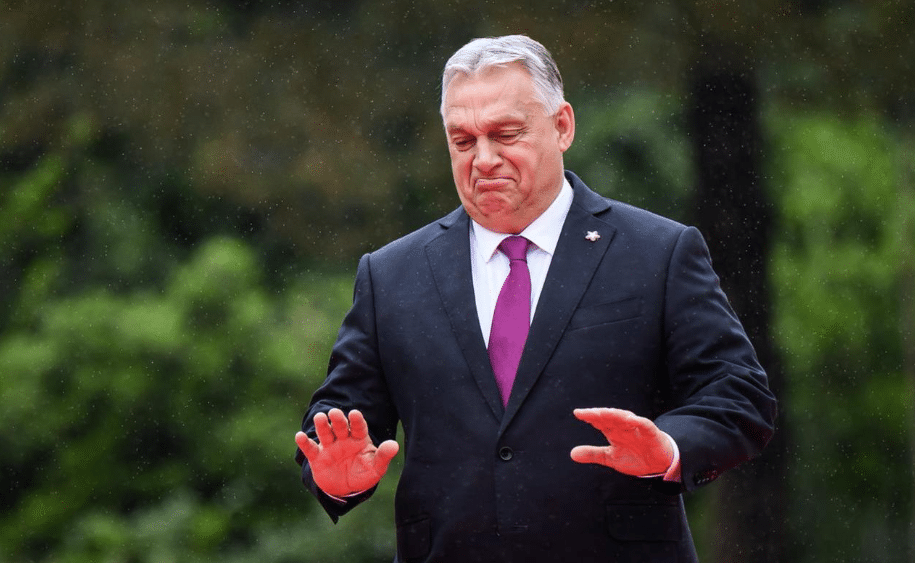
Hungarian Prime Minister Viktor Orbán has sharply criticized the European Union and Germany for allegedly pushing “war preparations,” escalating divisions within EU policymaking and raising eyebrows across the continent.
At a recent event in Budapest, Orbán warned that Europe is being driven by a “German war troika,” singling out German Chancellor Friedrich Merz, European Commission President Ursula von der Leyen, and European People’s Party leader Manfred Weber. He labeled them as the “biggest warmongers,” cautioning that if the current policies continue, “our grandchildren will have to pay the price.”
Election Politics Fuel Orbán’s Rhetoric
Orbán’s remarks come in the lead-up to Hungary’s April 2026 parliamentary elections, during which he has intensified his campaign against EU support for Ukraine. The Hungarian prime minister recently launched a national petition framing his stance as resistance to Brussels’ pressure to involve Hungary more deeply in the ongoing conflict.
In his messaging, Orbán has suggested, without evidence, that the EU could compel Hungary to send troops to Ukraine if his domestic political opponents gain power. Analysts note that this aligns with Orbán’s broader strategy of portraying himself as a protector of Hungary’s peace and sovereignty.
“Europe is being driven by a German war troika. If current policies continue, our grandchildren will have to pay the price,” Orbán said.
A Long-Running Theme: Peace versus War
This is not the first time Orbán has expressed concerns about EU policies escalating tensions. In the past, he warned that initiatives such as seizing frozen Russian assets to fund Ukraine or expanding Ukraine’s path toward EU membership could effectively “drag the EU into war.”
Hungary, under Orbán’s leadership, has often clashed with Western European governments over financial support for Ukraine, sanctions on Russia, and collective defense policies. These disputes have contributed to a growing divide within the EU over the bloc’s stance on the Russia-Ukraine war.
What’s at Stake for Europe
Orbán’s comments underscore deepening divisions inside the EU regarding the response to the ongoing conflict in Ukraine. While Berlin, Paris, and other Western capitals advocate for stronger military and financial backing for Kyiv, Hungary’s leadership frames these actions as dangerous escalation rather than deterrence.
The clash highlights a critical question for EU leaders: how to balance collective security and defense commitments with the political and social pressures within member states. Orbán’s rhetoric may complicate efforts to present a united European front in both foreign policy and defense strategy.
“The controversy illustrates the complex dynamics of European unity in the face of global conflict,” said one EU analyst.
Final Thoughts
Whether viewed as election posturing or a genuine policy stance, Viktor Orbán’s accusations signal a tense chapter in EU politics. The situation underscores the continuing challenge of reconciling national interests with collective security, leaving Europe at a crossroads in its approach to the Russia-Ukraine war.