
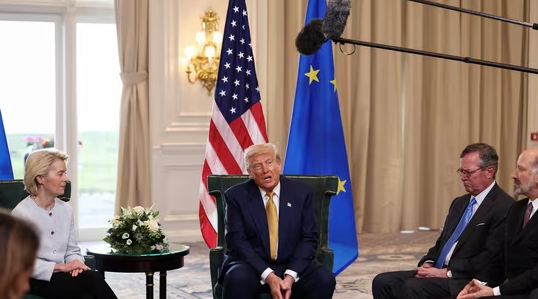
In the frosty dawn of 2026, Europe finds itself in the crosshairs of an unlikely alliance of critics: from the bombastic halls of the White House to the fortified Kremlin, and even from the war-torn trenches of Kyiv.
Donald Trump blasted European leaders as “weak” and “annoying” during his World Economic Forum address in Davos. Xi Jinping echoed sentiments of European complacency in bilateral talks, while Vladimir Putin derided the continent’s “smug” posturing amid the ongoing Ukraine conflict. Even Volodymyr Zelensky, Ukraine’s embattled president, joined the chorus, lambasting Europe’s sluggish aid deliveries as insufficient for the fight against Russian aggression.
This barrage of attacks, mostly verbal but with real geopolitical teeth, raises a pressing question: Why now? And what does it mean for a continent that once prided itself as the cradle of enlightenment and stability?
As senior editor overseeing world news coverage, I have pored over dispatches from Brussels to Beijing, drawing on recent events, historical precedents, and expert analyses. The picture that emerges is of Europe as a geopolitical giant with feet of clay: economically potent but militarily anemic, unified in theory but fractured in practice. This is not just rhetoric; it is a symptom of shifting global power dynamics that could reshape maps, markets, and alliances.
Recent Headlines Fueling the Fire
The latest salvos intensified in late 2025, coinciding with Trump’s return to power and escalating global tensions. In December, the United States released a national security strategy that criticized Europe for freeloading on American defense, prompting Berlin to push back firmly. The Trump administration doubled down, framing the critique as a “warning, not an insult,” while demanding concessions on everything from NATO spending to Arctic territories like Greenland.
NATO Secretary-General Mark Rutte’s diplomatic maneuvering averted a full crisis over Greenland but left allies “bruised and wary.” Meanwhile, from the East, Putin’s regime ramped up threats, warning that Russian missiles could target “any” European site amid deployments in Ukraine. Iran’s foreign minister piled on, mocking Europe’s dependence on the U.S. while vowing retaliation against any attacks.
In a twist, Zelensky publicly vented frustration over delayed arms shipments, calling out the continent’s “weak and annoying” bureaucracy. Social media amplified the debate. Analysts and citizens alike decried Europe’s “smug and slow” response, with one viral thread noting how leaders like Trump, Xi, Putin, and Zelensky are “blaming Europe for choices they made.”
Non-Western voices also chimed in. A year-end review highlighted how U.S. tariffs and China’s economic maneuvers have “cracked” global trade, hurting Europe disproportionately. A diplomatic spat involving Czech officials underscored internal turmoil, exacerbated by external pressures. As one Chatham House analysis warned, U.S. intentions toward Greenland threaten NATO’s future, leaving Europeans “concerned about defending themselves against a more unpredictable America.”
From Post-War Paradise to Present Predicament
Understanding this onslaught requires revisiting Europe’s post-World War II history. Ravaged by two global conflicts, the continent rebuilt under the U.S. security umbrella via NATO (1949) and the Marshall Plan. This Pax Americana allowed Europe to focus on economic integration, from the European Coal and Steel Community (1951) evolving into the European Union (1993), prioritizing welfare, human rights, and soft power over military might.
The fall of the Berlin Wall in 1989 appeared to confirm Europe as a “normative power,” exporting democracy and trade deals. But cracks emerged in the 21st century. The 2008 financial crisis exposed economic divides, Russia’s 2014 annexation of Crimea and the 2022 full-scale invasion of Ukraine shattered illusions of perpetual peace, and Europe’s energy dependence on Moscow—40 percent of EU gas pre-war—was revealed. The 2015-16 migrant crisis strained borders and politics, fueling populist movements like Brexit in 2016.
Now, a confluence of revanchist powers is rising while the United States pivots inward under “America First.” Trump 2.0 amplifies his 2016 critiques, Xi’s China views Europe as a market to dominate, and Putin exploits divisions, funding anti-EU parties and hybrid warfare. Zelensky’s barbs are poignant: Ukraine’s fight is Europe’s shield, yet aid lags due to bureaucratic inertia.
This is structural weakness. Europe has outsourced defense, with only 9 of 32 NATO members meeting 2 percent GDP spending in 2024. As Garry Kasparov noted on X, leaders dither over Russian assets while Putin bombs civilians. This is a story of complacency: a continent preaching multilateralism but failing to arm it.
Geographical Ripples: Arctic Ambitions to Eastern Frontlines
Geography magnifies the stakes. The Ukraine war, now in its fourth year, has turned Eastern Europe into a militarized zone, with Poland and the Baltics fortifying borders amid Russian saber-rattling. Putin’s threats of missile strikes evoke Cold War fears, potentially destabilizing the continent from Scandinavia to the Mediterranean.
Trump’s Greenland fixation highlights Arctic tensions. Melting ice opens new shipping routes and resources, but U.S. demands could fracture NATO’s northern flank. Immigration policies, criticized as “open borders” by detractors, have geographical roots in African instability and Middle Eastern conflicts, creating hotspots in the English Channel and Mediterranean. Escalations could trigger refugee surges, border closures, and hybrid attacks on infrastructure, as seen in recent GRU sabotage operations across Europe.
Europe’s geography, bridging East and West and North and South, makes it both prize and powder keg. Attacks erode unity and risk fragmentation reminiscent of pre-EU eras.
Economic Fallout: Trade Wars and the Cost of Complacency
Economic impacts are already biting. U.S. tariffs under Trump could shave 1 to 2 percent off EU GDP, hitting exporters like Germany hardest. Europe’s trade deficit with China—€291 billion in 2024—fuels Xi’s criticisms, prompting EU tariffs that risk retaliation and deindustrialization. Cutting Russian energy has spiked prices, contributing to inflation and recessions in manufacturing hubs.
Internal divisions worsen the problem. France pushes protectionism, Germany clings to exports, leaving the EU “dysfunctional,” according to Wolfgang Munchau. A Ben Norton analysis on X calls it “hopeless,” with EU leaders doubling down on U.S. subordination despite attacks. Stealing foreign assets, such as frozen Russian reserves, risks making Europe “uninvestible,” per Collingwood. Long-term, these dynamics could erode the euro’s global role and prosperity.
A Wake-Up Call for Europe
Europe’s critics may overdo the derision, but the core grievance—weakness amid global realignment—holds weight. As one X user put it, Europe’s focus on “homelessness, drug addiction, and LGBTQ communities” over defense has left it reliant on U.S. help. Yet this moment could serve as a catalyst: to boost defense, unify policy, and reclaim agency.
In a multipolar world, Europe must evolve from spectator to strategist. The alternative is a continent not only attacked in words but diminished in deeds. 2026’s conflicts, from Ukraine to trade battles, will test Europe’s ability to rise to the challenge.